
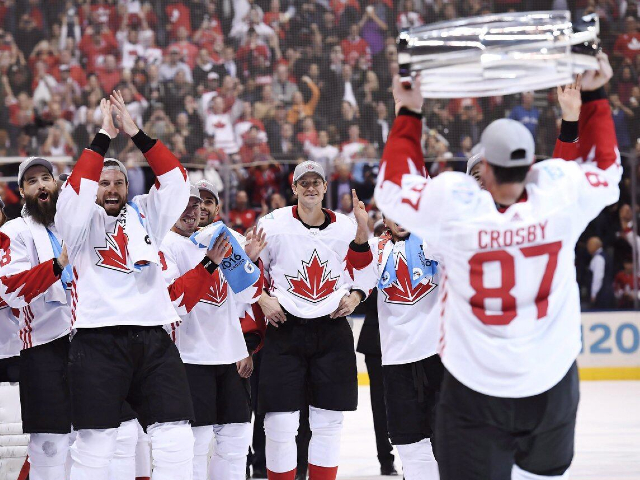
On the eve of the inaugural (and potentially only) Four Nations Face-Off, the NHL and NHLPA today announced the return of the World Cup Of Hockey, set to debut in February 2028 as a mid-season, rather than preseason, tournament, and recurring every four years thereafter.
Returning in its full form for the first time since 2016, which featured six national teams and two collective squads, this tournament is meant to host at least eight proper national teams, with games to be hosted in both Europe and North America, similar to the 1996 and 2004 tournaments; the countries and host cities are to be named at a later date.
Unlike any of the previous Canada or World Cups, however, is the fact that this tournament would replace the NHL All-Star break mid-season, meaning alternate NHL seasons would feature a large gap in team play in February, whether for the Olympics in 2026 or 2030, or now the World Cup in 2028 and 2032.
Like previous tournaments, this is being hosted by the NHL and the respective countries’ governing bodies, and is outside of the IIHF’s purview. However, the question then becomes how many countries will be able to field full rosters of NHL and AHL players, as only six countries presently (Canada, United States, Sweden, Finland, Czechia and Russia) have enough players to field a 23-man roster.
How the field can be filled to eight teams, by the likes of a Germany, Slovakia and/or Switzerland, and tap in players from outside North America, who would then need to interrupt their club seasons, remains a large question to be resolved, but surely the prospect of top stars from outside the “big six” like Leon Draisaitl, Juraj Slafkovský and Roman Josi is not one that the NHL wants to deal with. Freeing up European venues in the midst of their respective seasons as well could pose a logistical challenge.
The other question, like with the IIHF and IOC, remains the question about Russia’s participation. While the NHL does not need to adhere to IIHF and IOC rulings, as obviously Russian players are prevalent in the NHL, the optics of having Russia participate as long as their invasion of Ukraine is still underway is highly problematic. Beyond the issues of working with the Russian Ice Hockey Federation, which has ties to the Kremlin, the potential backlash from other European countries over their participation, like Czechia and Finland, could disrupt the entire tournament.
While there are certainly many logistics to still work out, the fact that the commitment to bring regular best-on-best international hockey beyond just four nations is an incredibly positive and exciting sign of things to come in just a few short years!
 International Hockey Lineal Championship